Securing an authoritative, scientifically calibrated pest control service in Greenville requires precise diagnostic evaluations and mechanical exclusion rather than indiscriminate chemical drenching throughout living quarters. Upstate residential structures situated near North Main, established estates flanking Augusta Road, and historic bungalows throughout Overbrook encounter intense biological pressure driven by regional moisture cycles.
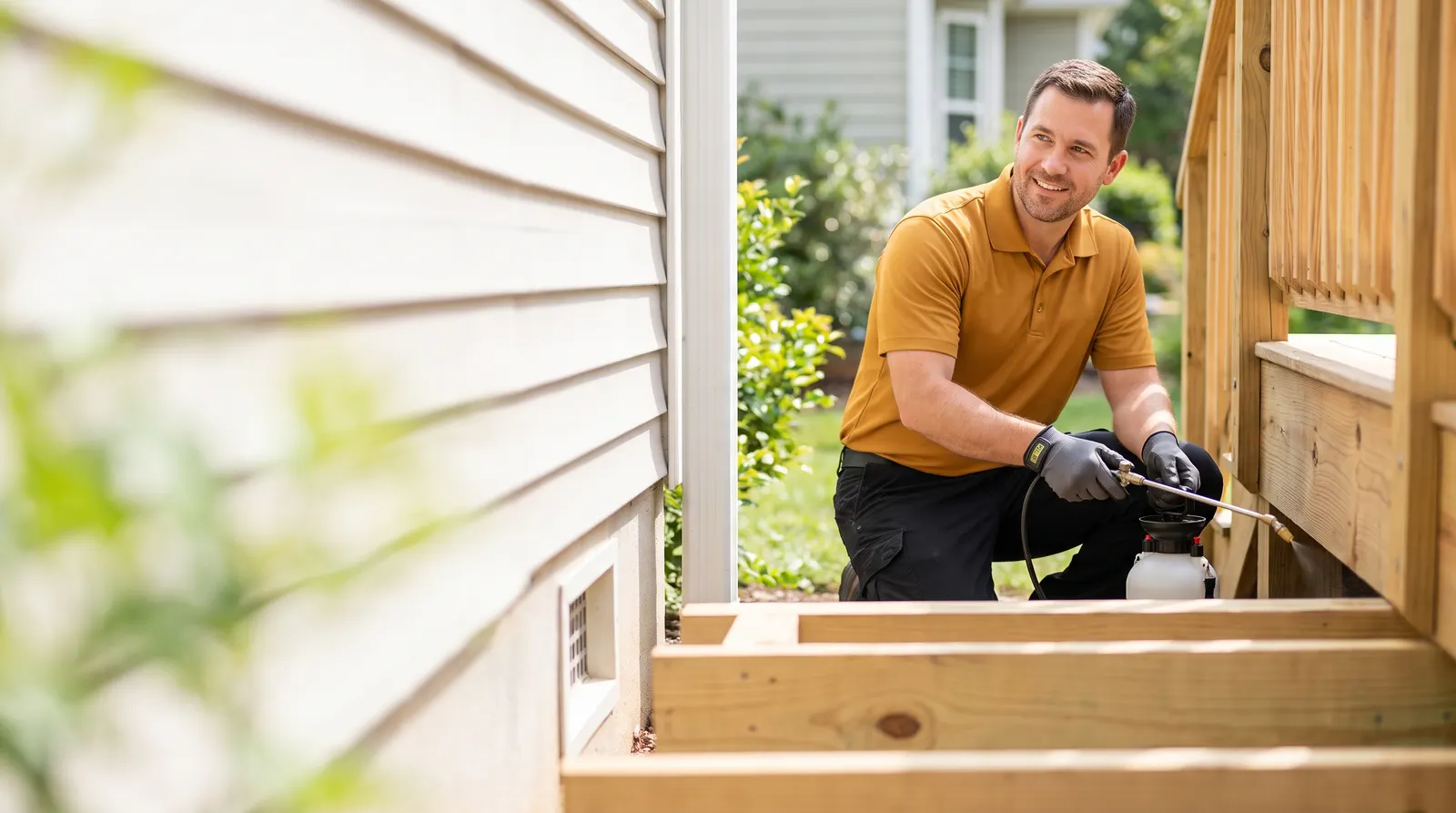
A professional pest control service in Greenville is a targeted structural treatment that identifies active insect and rodent infestations, eliminates colonies at their biological source, and seals home perimeters against ongoing pest intrusion.
Every service reflects the same meticulous attention to detail, whether it's a single job or a larger pest control sevice project across Greenville.
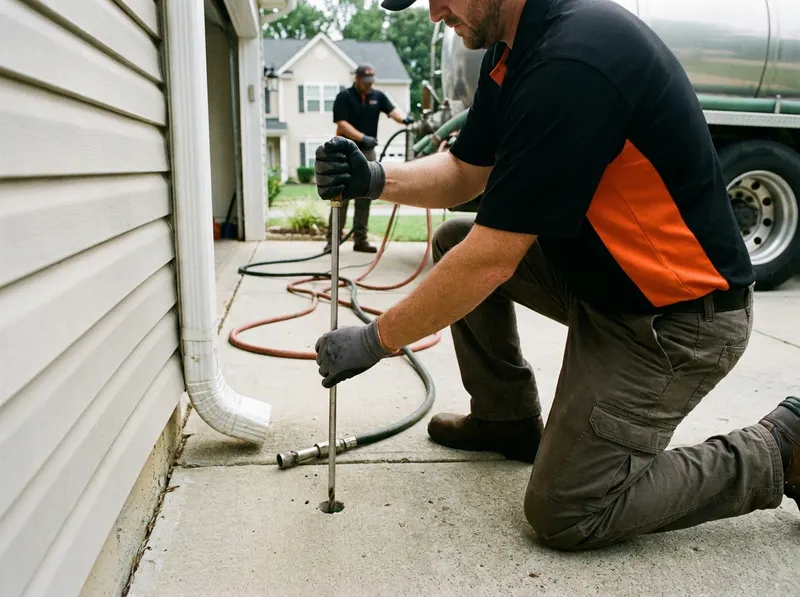
Surgical liquid non-repellent barrier installations and structural borate timber treatments engineered to eradicate subterranean termite colonies attacking framing members and floor sills across Greenville County. The protocol implements deep foundation trenching, sub-slab drilling around masonry perimeters, and specialized soil saturation using non-repellent termiticides that worker termites unknowingly carry directly to underground reproductive queens. This systematic biological transfer neutralizes the subterranean nest entirely while preventing future upward migration through foundation mortar joints, expansion cracks, and hollow concrete block cores.
Get a quote →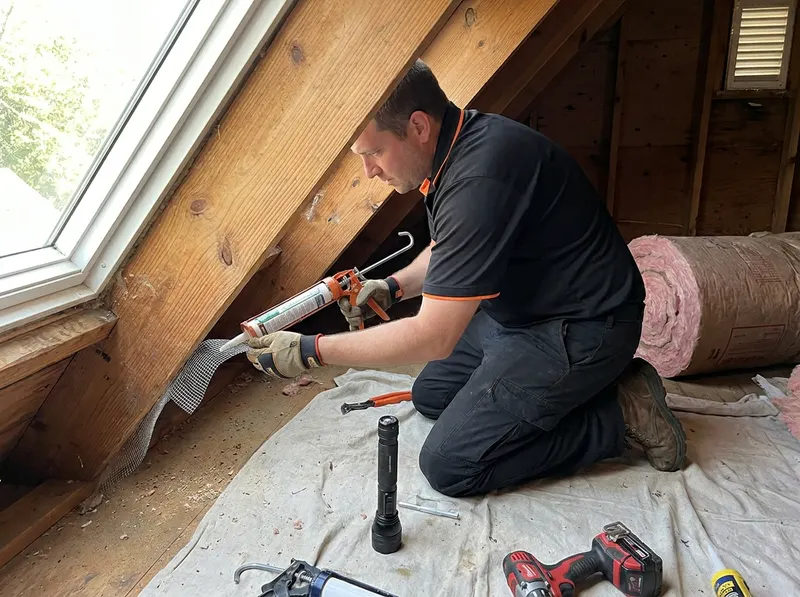
Full-scale mechanical rodent entry-point mitigation utilizing heavy-gauge copper wire mesh, custom-fitted galvanized steel hardware cloth, and metal flashing to structurally seal roof rat and house mouse ingress corridors. Field technicians run thorough thermal diagnostics across attic spaces, exterior rooflines, and foundation lines to locate sub-inch access gaps. Once all biological entry channels are fortified, technicians establish closed-envelope mechanical trapping protocols and complete contaminated attic insulation extraction, micro-vacuuming, and commercial enzymatic sanitation to eliminate pheromone tracking trails.
Get a quote →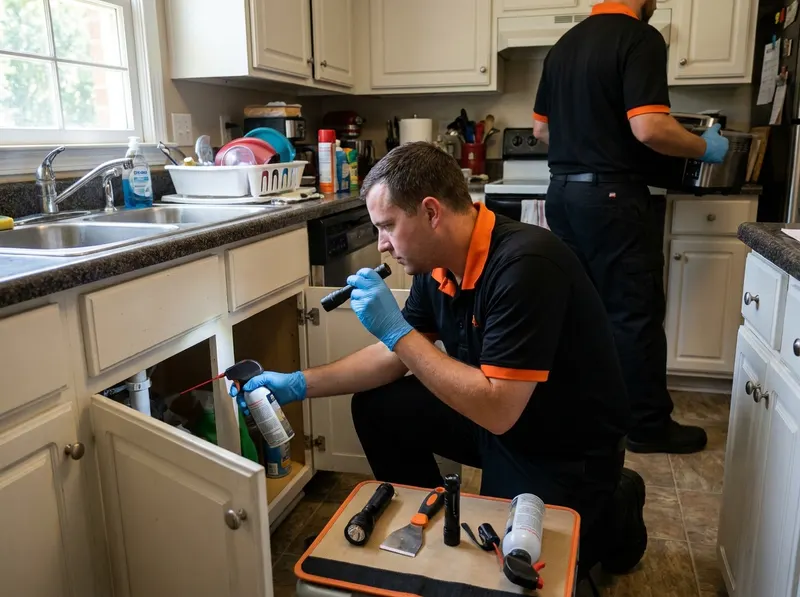
Clinical multi-stage baiting and insect growth regulator (IGR) deployments specifically calibrated to eradicate persistent indoor German cockroach populations inside kitchen cabinets, appliance motor housings, and utility cavities. Technicians inject targeted indoxacarb and hydramethylnon bait matrices into secluded, non-accessible crevices where breeding roaches harbor. The strategic pairing with juvenoid hormonal growth regulators arrests egg hatching and sterilizes adult nymphs, terminating rapid reproductive cascades without releasing airborne chemical drift across food preparation surfaces.
Get a quote →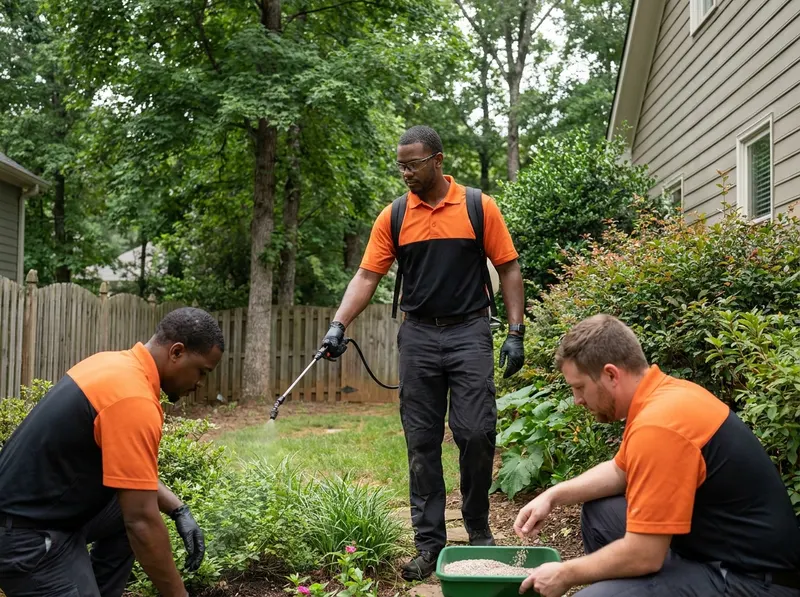
Targeted perimeter barrier misting utilizing microencapsulated pyrethroids and botanical extracts focused exclusively on shade-dense harborage foliage, ornamental shrubbery, and low-canopy branches where adult mosquitoes rest. Technicians pair adult foliage knockdown treatments with bacterial Bacillus thuringiensis israelensis (BTI) larvicide briquettes deposited in standing drainage swales, gutters, and ornamental retention pools. This two-phase disruption prevents aquatic larval maturation while drastically driving down biting adult populations from late spring through early autumn.
Get a quote →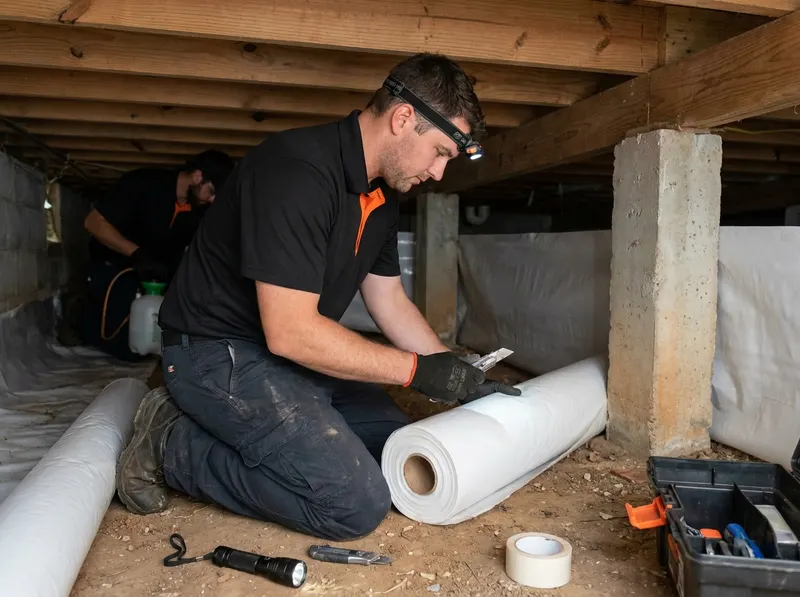
Engineered crawlspace moisture remediation deploying reinforced 10-mil to 20-mil polyethylene ground-cover vapor barriers, foundation vent screening, and localized drainage adjustments to lower ambient subterranean humidity. Excess moisture within crawlspace framing encourages wood rot fungi, powderpost beetle activity, and termite tunneling. Technicians treat bare wooden structural timbers with water-soluble disodium octaborate tetrahydrate, creating an impassable chemical deterrent against wood-destroying organisms while permanently reducing fungal decay vectors beneath older homes.
Get a quote →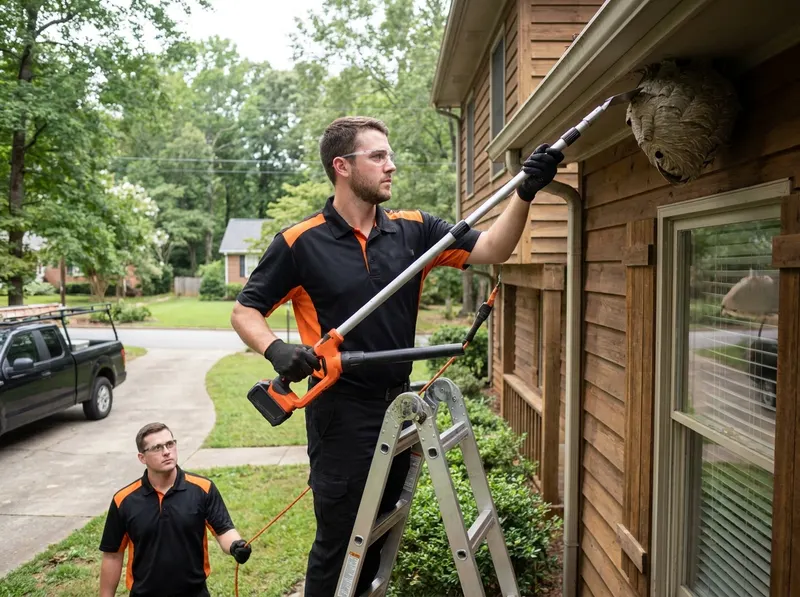
High-reach mechanical removal and focused micro-residual injections designed to eradicate aerial bald-faced hornet structures, paper wasp nesting clusters, and subterranean yellowjacket colonies. Technicians deploy specialized telescoping delivery systems to treat nests located beneath high soffits, roof overhangs, and architectural window peaks without compromising customer safety. Underground ground-nest cavities are directly excavated and neutralized using dense residual dusts that eliminate aggressively defending worker wasps and eliminate emerging subterranean pupae.
Get a quote →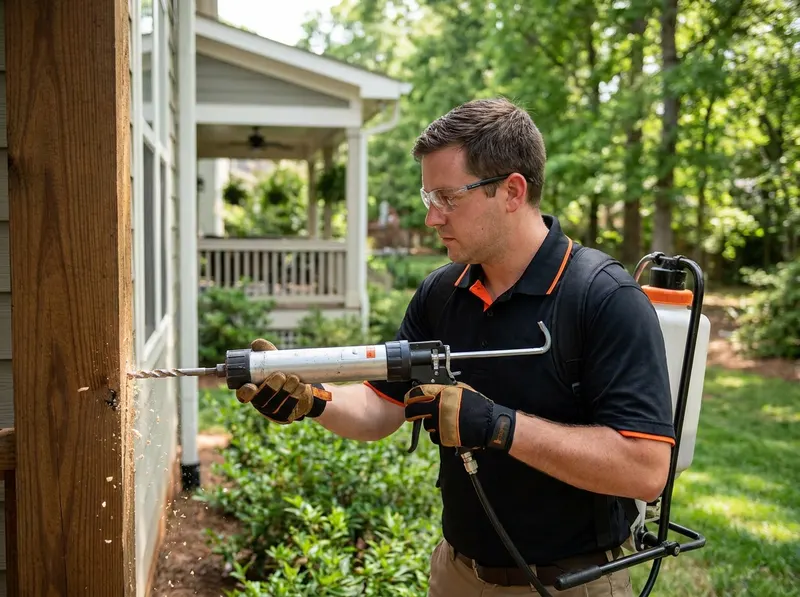
Targeted structural timber interventions and slow-acting non-repellent colony transfer sprays formulated to dismantle wood-excavating carpenter ant satellite nests within wall voids, sill plates, and window headers. Rather than dispersing superficial contact sprays that force satellite colonies to fragment and relocate throughout interior framing, our technicians apply specialized transfer toxins along primary pheromone foraging trails. Foraging ants transport the lethal active ingredient back into inner nesting cavities, systematically eliminating brood chambers and primary queens.
Get a quote →Exterior boundary barrier fortification designed to intercept large, outdoor-dwelling smokybrown and American cockroaches before they breach weatherstripping, attic vents, or weep holes. Technicians broadcast water-resistant granular baits and microencapsulated liquid barriers throughout pine straw beds, foundation mulches, and landscape borders adjoining the structure. This creates a dense biochemical perimeter that prevents perimeter-dwelling roaches from establishing breeding colonies inside humid structural crawlspaces and wall cavities.
Get a quote →You get a firm, itemized quote for your pest control sevice before any work begins, no surprises, no pressure.
Careful prep, tidy work, and a full cleanup when we are done. We treat your home and belongings like our own.
The same trusted, background-checked team from the first call to the final check.
Determining the correct pest management methodology requires aligning the structural design of the building, regional soil compositions, and pest reproductive behavior with specialized eradication tools. Homeowners facing subterranean termite activity or timber-destroying beetles beneath home foundations must avoid superficial interior aerosol treatments or perimeter cosmetic granules; these non-residual measures fail to interrupt sub-grade reproductive nests. Instead, the verified solution demands localized non-repellent liquid termiticide barriers, deep soil injection around foundational footings, and structural borate applications across subfloor joists. The trade-off is labor-intensive: physical trenching along masonry foundation borders and specialized concrete drilling along exterior slab perimeters are mandatory to achieve uninterrupted chemical defense envelopes lasting up to ten years.
When structural invasions involve pervasive perimeter pests, such as foraging black carpenter ants, Asian needle ants, or smokybrown cockroaches, property managers often debate between ongoing monthly surface sprays and single-event exterior physical exclusion paired with granular perimeter baiting. Selecting mechanical exclusion and botanical barrier treatments provides superior, long-term environmental protection by sealing weep holes, copper utility chases, and fascia gaps. The trade-off involves higher upfront structural repairs, masonry sealing, and caulking investments compared to nominal initial spray visits, yet it permanently minimizes ongoing pesticide exposure within family spaces. For severe interior health threats like German cockroach outbreaks or bed bug colonies residing in sensitive interior cavities, broadcast surface treatments represent an ineffective, dangerous vector that scatters colonies into adjacent wall cavities. The clinically validated decision pathway utilizes targeted insect growth regulators (IGRs), microencapsulated baits, and precise wall-void dry dusting. The primary trade-off requires meticulous structural prep work, thorough pantry cleanouts, and rigorous sanitation by the resident to eliminate competing nutritional sources, allowing slow-acting non-repellent baits to circulate thoroughly through the nesting population until complete colony collapse occurs.
Every project gets a firm, written price after an on-site visit. Ranges below for orientation.
Tell us about your pest control sevice job and we'll send a clear, written quote, usually the same day. Or just call and talk to a real Greenville pro.
(864) 215-5116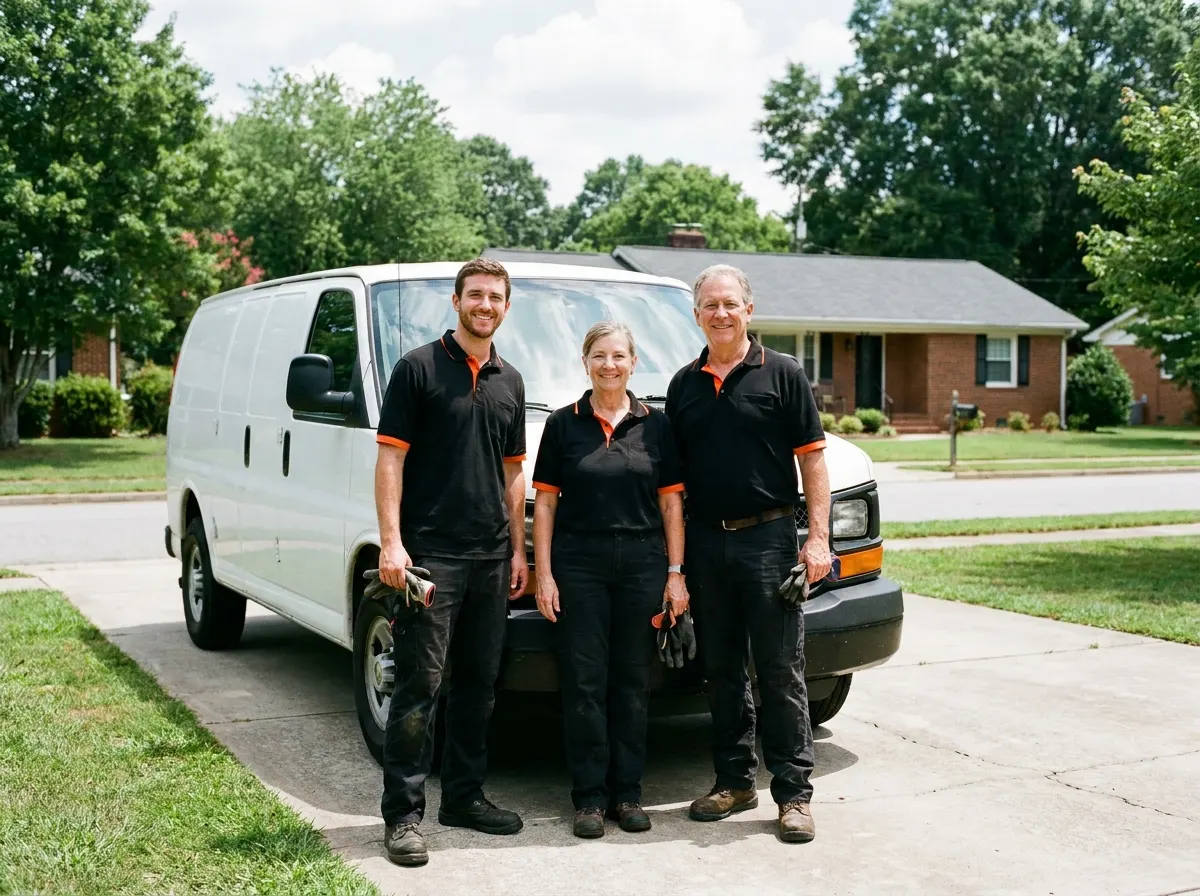
Greenville properties occupy a distinct biological crossroads shaped by the transitional foothills of the Blue Ridge Mountains, elevated humidity levels, and major water flow networks surrounding the Reedy River and Enoree River basins. The region's underlying geology consists predominantly of dense Cecil soil series red clays, which retain heavy subsurface moisture following seasonal Piedmont rainstorms while developing structural shrinkage fissures during dry summer stretches. These subterranean fissures create natural superhighways for eastern subterranean termites seeking direct foundation contact beneath historic floor sills in neighborhoods like Alta Vista, Overbrook, and North Main. Simultaneously, mature tree canopies dominated by white oaks, loblolly pines, and American sweetgums drop tremendous volumes of organic matter over residential rooflines along Augusta Road, Cleveland Forest, and Parkins Mill. This damp leaf litter feeds flourishing populations of wood-destroying carpenter ants and smokybrown cockroaches, which routinely transit from overhanging limbs directly onto cedar shingles, fascia boards, and attic louvers. Farther down in foundational crawlspaces, older vented earthen basements trap warm, humid air that condenses against cool structural timbers. This atmospheric dynamic elevates wood moisture content above critical twenty percent thresholds, inviting rapid timber colonization by anobiid powderpost beetles and subterranean termites. Effective structural pest eradication across the Upstate requires an intimate understanding of these regional soil horizons, tree cover pressures, and crawlspace atmospheric dynamics, ensuring every chemical barrier, borate application, and mechanical exclusion is engineered specifically to withstand Piedmont climatic cycles.
 SilverOak Bug Elimination